A Winter Walk Along the Thicket Edge
A winter walk along the thicket edge reveals bare stems, sheltered pockets and seasonal changes in growth, with simple notes that make return visits useful.
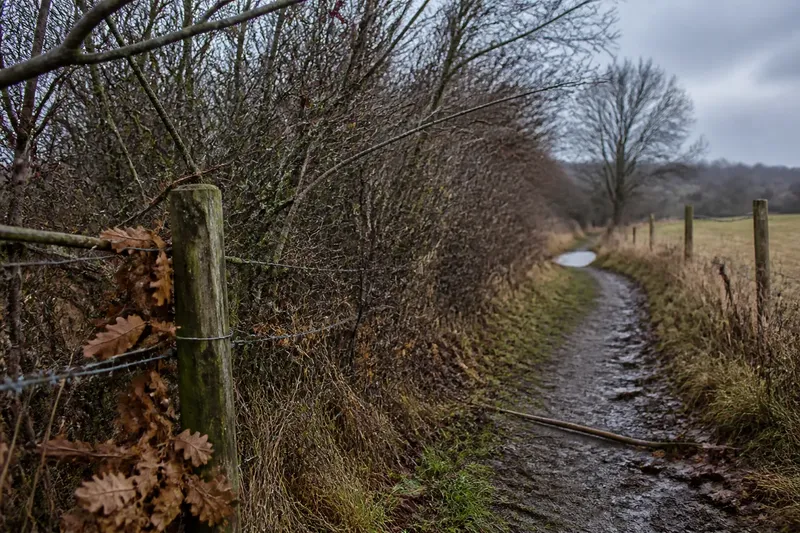
A winter walk along the thicket edge can reveal which stems have changed shape since leaf fall and where snow, rain or wind has altered the ground. The useful winter question is not how far you can see into the tangle, but what the exposed framework and weather-marked boundary show from the path.
Where should a winter walk along the thicket edge begin?
Choose an established path, field margin or firm verge beside a clear boundary of bramble, hazel or hawthorn. Before setting off, pick a fixed viewpoint such as a gate or path junction; returning to the same place makes changes easier to distinguish from differences in angle.
From that point, note the weather and the ground immediately beside the path. Wet soil, frost, windblown leaves or a shallow puddle can explain why a boundary looks different today, without requiring you to step into it.
What does winter reveal about branches?
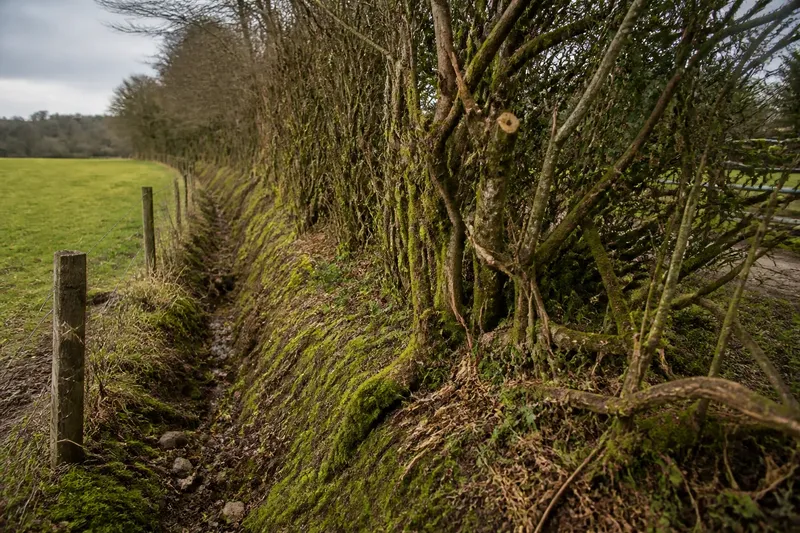
With leaves gone, the structure of each shrub is easier to describe. Look for upright shoots, bowed branches, crossing stems and tips carrying buds or seed heads. Notice whether the structure is newly visible against open ground or still merges into a dark mass.
Describe damage without guessing at its cause. A snapped twig, a leaning stem or a ragged end may have several explanations, and a view from the path rarely settles the matter. Record what you can actually see, not the story the shape seems to invite.
Persistent berries and seed heads also stand out in winter. Their colour and position can help distinguish one stretch from another; leave them in place rather than handling or collecting them.
How can you read winter weather along the boundary?
Winter leaves visible traces of exposure. Look for leaves caught against a fence, bare soil at the path edge, or a drift of litter gathered against a dense clump. Compare these features with a nearby open patch, but treat the contrast as a clue about conditions rather than a complete account of what happens inside the thicket.
After rain or a thaw, notice where water collects and where the ground remains firm. Do not step onto soft margins to inspect them: footprints can obscure the surface you wanted to read, with a certain lack of irony.
Say you arrive at a public footpath beside a hawthorn hedge after a windy night. You see leaves piled against one fence post and a fine branch newly lying across the verge; you note both from the path and compare them with the same post on a later visit. The expected result is a clear record of visible change, while the cause of the fallen branch remains uncertain.
What should you record on a winter walk?
A concise note is more useful than a catalogue of impressions. Write down the fixed viewpoint, the weather you can observe, one change in the plants and one feature of the ground or visibility.
- Check whether the same gate or path junction is still your viewpoint; if it is, compare the scene there, and if it is not, choose a new fixed landmark and record the change.
- Check whether branches carry visible buds or persistent berries; if they do, note their position without touching them, and if they do not, describe the bare outline instead.
- Check whether leaves have gathered against a fence or clump; if they have, record where they sit, and if they have not, note the exposed ground without crossing the boundary.
- Check whether the soil beside the path is firm, wet or frosted; if it is firm, observe from the verge, and if it is soft or slippery, stay on the path and omit close inspection.
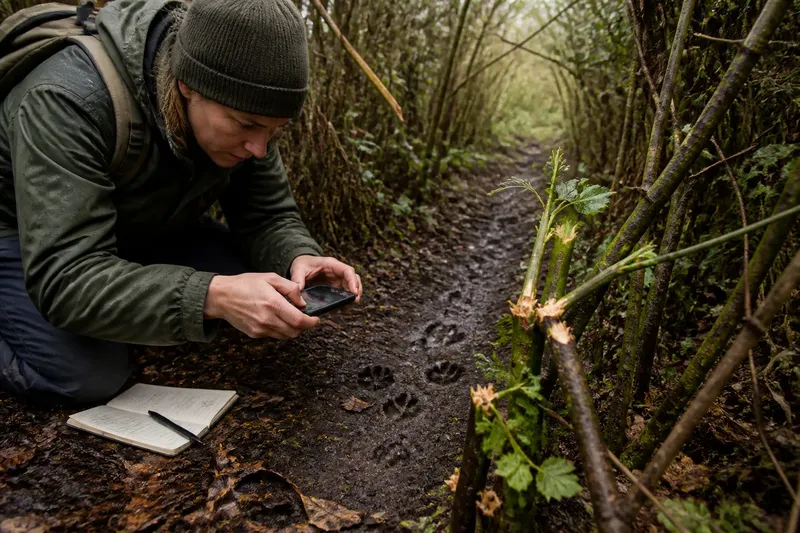
- Check whether an animal is visible or has left a clear sign; if it is visible, give it room and do not follow, and if only a sign is visible, describe its position without moving it.
- Check whether the view reaches the same distant feature as before; if it does, record what remains visible, and if it does not, note where stems or terrain block the sightline.
A pencil and small notebook are enough. A phone photograph can help compare the outline from a fixed spot, but avoid flash towards wildlife and do not leave the path for a clearer frame.
Which winter observations are easy to misread?
A quiet thicket is not necessarily empty, and a visible gap does not necessarily mark a route. Animals may be concealed or out of view; bare branches do not make cover transparent.
Likewise, a fallen twig is not automatically evidence of browsing, and a patch of leaves does not prove that an animal has sheltered beneath them. Keep observations separate from interpretations, particularly when the view is partial.
What questions come up on a winter walk along the thicket edge?
When is the best time to see bare stems?
Choose conditions in which branches contrast clearly with their background. Low light can pick out fine twigs, while glare or a dark backdrop can make them harder to distinguish.
How can I compare visits without a map?
Use a gate, path junction or distinctive tree as a fixed reference, and describe the view from that exact point. A short note about what is newly visible or concealed is enough to make a later comparison useful.
Should I enter a gap to inspect a sheltered pocket?
No. Observe it from the established path and leave branches, leaf litter and low growth undisturbed; if the space remains hidden, record that limit rather than trying to remove it.
What should I do if wildlife appears?
Stop, keep a comfortable distance and avoid blocking its route. Note only what is visible from where you stand, then continue when the animal has moved away.
How can a return visit clarify seasonal change?
Return to the same viewpoint after conditions have changed and compare the same features: a shrub’s outline, leaves collected at the fence, or the distant bank visible from the bend. Weather and plant growth can alter several things at once, so record the difference without forcing a single explanation.
For a winter walk along the thicket edge, the most useful note may be that a branch now crosses the verge, a patch of ground has become exposed, or the far bank has disappeared behind stems. Keep the observation tied to its viewpoint and conditions; that makes the next visit easier to read, even if the thicket declines to explain itself.